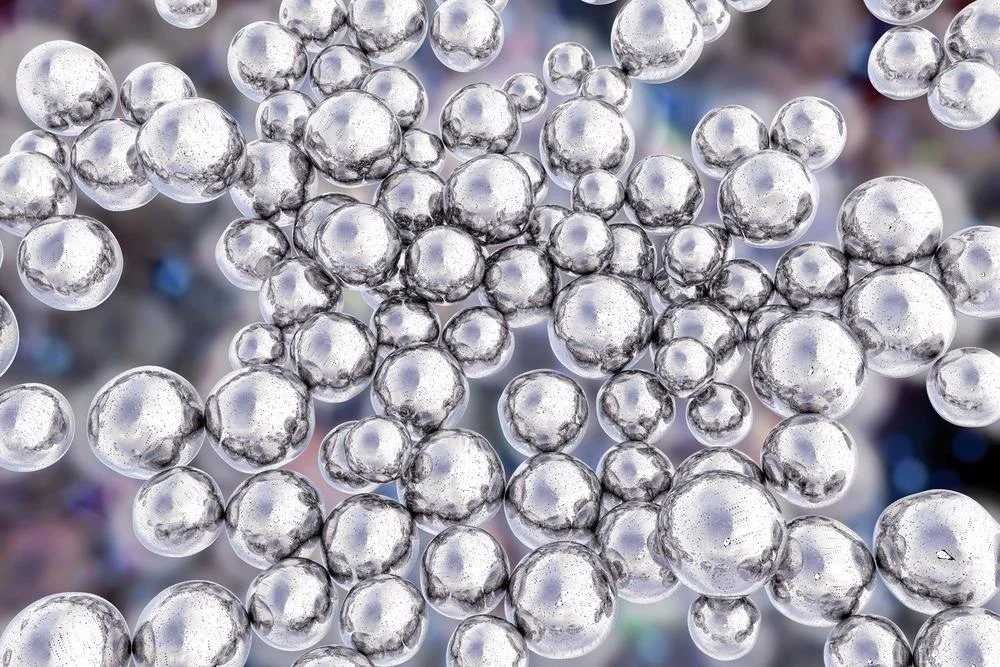
In a paper printed in the journal Applied Materials & Interfaces, surface plasmon resonance microscopy was used to investigate the dissolving mechanism of nanomaterials
Sustainability has rightly become an integral part of nearly every activity we undertake today. The world of nanotechnology research and development is no different.
Researchers at the University of Missouri are applying a form of artificial intelligence (AI)—previously used to analyze how National Basketball Association (NBA) players move
Research led by the University of Strathclyde suggests that solar energy can be accessed and converted into hydrogen—a clean and renewable fuel. Greenhouse gas
Southwest Research Institute (SwRI) demonstrated the effectiveness of its CAT-DEF technology during the WCX World Congress Experience in Detroit, which took place April 5–7.
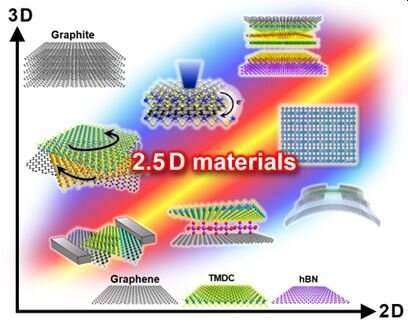
Scientists are exploring new ways to artificially stack two-dimensional (2D) materials, introducing so-called 2.5D materials with unique physical properties. Researchers in Japan reviewed the
In one single nanotrack, a research team has achieved the annihilation, fusion and shunting of two magnetic skyrmions with opposite chirality via local reversal
In a paper printed in the journal Applied Materials & Interfaces, surface plasmon resonance microscopy was used to investigate the dissolving mechanism of nanomaterials
Sustainability has rightly become an integral part of nearly every activity we undertake today. The world of nanotechnology research and development is no different.
Researchers at the University of Missouri are applying a form of artificial intelligence (AI)—previously used to analyze how National Basketball Association (NBA) players move
Research led by the University of Strathclyde suggests that solar energy can be accessed and converted into hydrogen—a clean and renewable fuel. Greenhouse gas
Southwest Research Institute (SwRI) demonstrated the effectiveness of its CAT-DEF technology during the WCX World Congress Experience in Detroit, which took place April 5–7.
Scientists are exploring new ways to artificially stack two-dimensional (2D) materials, introducing so-called 2.5D materials with unique physical properties. Researchers in Japan reviewed the
In one single nanotrack, a research team has achieved the annihilation, fusion and shunting of two magnetic skyrmions with opposite chirality via local reversal